



About ANOTHER presidential guard who drank and was derelict in his duties- the same could be said for JFK's guards: they failed to protect JFK and drank the night before...well, Clint Hill, Jack Ready, Paul Landis, Glen Bennett and four others did
What happened to Officer John Parker, the man who chose the wrong night to leave his post at Ford's Theater?
By Paul Martin
After President Lincoln settled in to enjoy Our American Cousin at Ford's Theatre, his guard left to drink at a nearby saloon, leaving Lincoln vulnerable.
When a celebrity-seeking couple crashed a White House state dinner last year, the issue of presidential security dominated the news. The Secret Service responded by putting three of its officers on administrative leave and scrambled to reassure the public that it takes the job of guarding the president very seriously. “We put forth the maximum effort all the time,” said Secret Service spokesman Edwin Donovan.
That kind of dedication to safeguarding the president didn’t always exist. It wasn’t until 1902 that the Secret Service, created in 1865 to eradicate counterfeit currency, assumed official full-time responsibility for protecting the president. Before that, security for the president could be unbelievably lax. The most astounding example was the scant protection afforded Abraham Lincoln on the night he was assassinated. Only one man, an unreliable Washington cop named John Frederick Parker, was assigned to guard the president at Ford’s Theatre on April 14, 1865.
Today it’s hard to believe that a single policeman was Lincoln’s only protection, but 145 years ago the situation wasn’t that unusual. Lincoln was cavalier about his personal safety, despite the frequent threats he received and a near-miss attempt on his life in August 1864, as he rode a horse unescorted. He’d often take in a play or go to church without guards, and he hated being encumbered by the military escort assigned to him. Sometimes he walked alone at night between the White House and the War Department, a distance of about a quarter of a mile.
John Parker was an unlikely candidate to guard a president—or anyone for that matter. Born in Frederick County, Virginia, in 1830, Parker moved to Washington as a young man, originally earning his living as a carpenter. He became one of the capital’s first officers when the Metropolitan Police Force was organized in 1861. Parker’s record as a cop fell somewhere between pathetic and comical. He was hauled before the police board numerous times, facing a smorgasbord of charges that should have gotten him fired. But he received nothing more than an occasional reprimand. His infractions included conduct unbecoming an officer, using intemperate language and being drunk on duty. Charged with sleeping on a streetcar when he was supposed to be walking his beat, Parker declared that he’d heard ducks quacking on the tram and had climbed aboard to investigate. The charge was dismissed. When he was brought before the board for frequenting a whorehouse, Parker argued that the proprietress had sent for him.
In November 1864, the Washington police force created the first permanent detail to protect the president, made up of four officers. Somehow, John Parker was named to the detail. Parker was the only one of the officers with a spotty record, so it was a tragic coincidence that he drew the assignment to guard the president that evening. As usual, Parker got off to a lousy start that fateful Friday. He was supposed to relieve Lincoln’s previous bodyguard at 4 p.m. but was three hours late.
Lincoln’s party arrived at the theater at around 9 p.m. The play, Our American Cousin, had already started when the president entered his box directly above the right side of the stage. The actors paused while the orchestra struck up “Hail to the Chief.” Lincoln bowed to the applauding audience and took his seat.
Parker was seated outside the president’s box, in the passageway beside the door. From where he sat, Parker couldn’t see the stage, so after Lincoln and his guests settled in, he moved to the first gallery to enjoy the play. Later, Parker committed an even greater folly: At intermission, he joined the footman and coachman of Lincoln’s carriage for drinks in the Star Saloon next door to Ford’s Theatre.
John Wilkes Booth entered the theater around 10 p.m.. Ironically, he’d also been in the Star Saloon, working up some liquid courage. When Booth crept up to the door to Lincoln’s box, Parker’s chair stood empty. Some of the audience may not have heard the fatal pistol shot, since Booth timed his attack to coincide with a scene in the play that always sparked loud laughter.
No one knows for sure if Parker ever returned to Ford’s Theatre that night. When Booth struck, the vanishing policeman may have been sitting in his new seat with a nice view of the stage, or perhaps he had stayed put in the Star Saloon. Even if he had been at his post, it’s not certain he would have stopped Booth. “Booth was a well-known actor, a member of a famous theatrical family,” says Ford’s Theatre historical interpreter Eric Martin. “They were like Hollywood stars today. Booth might have been allowed in to pay his respects. Lincoln knew of him. He’d seen him act in The Marble Heart, here in Ford’s Theatre in 1863.”
A fellow presidential bodyguard, William H. Crook, wouldn’t accept any excuses for Parker. He held him directly responsible for Lincoln’s death. “Had he done his duty, I believe President Lincoln would not have been murdered by Booth,” Crook wrote in his memoir. “Parker knew that he had failed in duty. He looked like a convicted criminal the next day.” Parker was charged with failing to protect the president, but the complaint was dismissed a month later. No local newspaper followed up on the issue of Parker’s culpability. Nor was Parker mentioned in the official report on Lincoln’s death. Why he was let off so easily is baffling. Perhaps, with the hot pursuit of Booth and his co-conspirators in the chaotic aftermath, he seemed like too small a fish. Or perhaps the public was unaware that a bodyguard had even been assigned to the president.
Incredibly, Parker remained on the White House security detail after the assassination. At least once he was assigned to protect the grieving Mrs. Lincoln before she moved out of the presidential mansion and returned to Illinois. Mrs. Lincoln’s dressmaker, former slave Elizabeth Keckley, recalled the following exchange between the president’s widow and Parker: “So you are on guard tonight,” Mrs. Lincoln yelled, “on guard in the White House after helping to murder the President.”
“I could never stoop to murder,” Parker stammered, “much less to the murder of so good and great a man as the President. I did wrong, I admit, and have bitterly repented. I did not believe any one would try to kill so good a man in such a public place, and the belief made me careless.”
Mrs. Lincoln snapped that she would always consider him guilty and ordered him from the room. Some weeks before the assassination, she had written a letter on Parker’s behalf to exempt him from the draft, and some historians think she may have been related to him on her mother’s side.
Parker remained on the Metropolitan Police Force for three more years, but his shiftlessness finally did him in. He was fired on August 13, 1868, for once again sleeping on duty. Parker drifted back into carpentry. He died in Washington in 1890, of pneumonia. Parker, his wife and their three children are buried together in the capital’s Glenwood Cemetery—on present-day Lincoln Road. Their graves are unmarked. No photographs have ever been found of John Parker. He remains a faceless character, his role in the great tragedy largely forgotten.
Saturday, July 30, 2011


Thursday, July 28, 2011
December 16-17 1961 - President John F. Kennedy visits Venezuela and Colombia
December 16-17 1961 - President John F. Kennedy visits Venezuela and Colombia
MORE Blaine lies exposed: agents on rear of limo, nice speed of cars, full bubbletop (no rain; nice weather), good motorcycle formation, press/ photographers in front of JFK's limo
MORE Blaine lies exposed: agents on rear of limo, nice speed of cars, full bubbletop (no rain; nice weather), good motorcycle formation, press/ photographers in front of JFK's limo
The White House Detail in 1963 (nice ripoff of my video [s] and sources LOL)
The White House Detail in 1963
JFK Hawaii Visit 1963 (New Footage)
http://www.youtube.com/watch?v=cqUGLapfrW4
JFK Hawaii Visit 1963 (New Footage)
Excellent film/ video! Notice the agents running beside JFK's limo. As my research has shown, if they would have been there (as they normally were) on 11/22/63, JFK would have lived. This augments OTHER films and videos from the same trip confirming this protective formation. Also depicts the press/ photographers flatbed trucks in FRONT of the limo, something also missing in Dallas
JFK Hawaii Visit 1963 (New Footage)
Excellent film/ video! Notice the agents running beside JFK's limo. As my research has shown, if they would have been there (as they normally were) on 11/22/63, JFK would have lived. This augments OTHER films and videos from the same trip confirming this protective formation. Also depicts the press/ photographers flatbed trucks in FRONT of the limo, something also missing in Dallas
Monday, July 11, 2011
Agent Mike Shannon: on JFK's Texas trip
Monday, July 11, 2011
Former Secret Service agent: Betty Ford looked after us
Written by
The Associated Press
GRAND RAPIDS — An ex-Secret Service agent says former First Lady Betty Ford was like “a mother” to him and his colleagues.
Mike Shannon signed a condolence book for Ford at the Gerald R. Ford Presidential Museum in Grand Rapids. He was among many who came to express their sympathy to the Ford family after Betty Ford's death in California on Friday.
Shannon told WOOD-TV that he protected the Fords, and Betty Ford was always concerned about the agents and their families. He says she once sent him home with a bag of oranges for his wife.
The museum says its lobby will be open around the clock until further notice so people can sign the book.
Her body will be sent to Michigan for burial at the museum alongside her husband.
http://www.thetimesherald.com
Michael J. Shannon (V.P./ LBJ Detail): on duty at LBJ Ranch on
11/21/63; went to Hotel Texas on the night of 11/21/63 [12 Mid-8 a.m.
11/22/63]; went back to Johnson City, TX afterwards
Former Secret Service agent: Betty Ford looked after us
Written by
The Associated Press
GRAND RAPIDS — An ex-Secret Service agent says former First Lady Betty Ford was like “a mother” to him and his colleagues.
Mike Shannon signed a condolence book for Ford at the Gerald R. Ford Presidential Museum in Grand Rapids. He was among many who came to express their sympathy to the Ford family after Betty Ford's death in California on Friday.
Shannon told WOOD-TV that he protected the Fords, and Betty Ford was always concerned about the agents and their families. He says she once sent him home with a bag of oranges for his wife.
The museum says its lobby will be open around the clock until further notice so people can sign the book.
Her body will be sent to Michigan for burial at the museum alongside her husband.
http://www.thetimesherald.com
Michael J. Shannon (V.P./ LBJ Detail): on duty at LBJ Ranch on
11/21/63; went to Hotel Texas on the night of 11/21/63 [12 Mid-8 a.m.
11/22/63]; went back to Johnson City, TX afterwards
One Pissed Off Veteran re: "The Kennedy Detail"
http://opovet.blogspot.com/2011/06/kennedy-detail-book-review.html
"Thursday, June 23, 2011
The Kennedy Detail: Book Review
I don't ordinarily do book reviews except for my Book of the Month selections, but I have to talk about this one.
I just read The Kennedy Detail: JFK's Secret Service Agents Break Their Silence by former Kennedy-era Secret Service agent Gerald Blaine (cowritten -- i.e., ghostwritten -- by Lisa McCubbin).
As you might expect, it's basically a cover-your-ass account of the inner workings of the Secret Service White House detail leading up to, at the time of, and immediately following the JFK assassination. We don't get any breathless accounts of Kennedy's womanizing, for example, or any real behind-the-scenes gossip. Instead, the authors take great defensive pains to cover up or explain away the many failures of their protection of the president, and to support the official Oswald-did-it-and-did-it-alone Warren Report version of events.
Except for one notable exception. Taken from the narratives and reports of the actual boots-on-the-ground Secret Service agents who were actually at the scene, two of whom were in the death car and four of whom were on the outside of the followup car, it becomes clear that they all agree that two different shots hit JFK and John Connally.
This is almost buried in the almost-too-much-extraneous-detail of the events in Dealey Plaza, but it is a bombshell. Or it should be, if the media was doing its job.
Even a casual student of the assassination knows that if JFK and Connally were hit by two different bullets (which is what Connally said all along and which is what a careful examination of the infamous Zapruder film shows), then the flimsy fabric of the Warren Report is left in shreds.
Here's why: The Warren Commission found that only three shots were fired (this was a foregone conclusion even before the commission was set up, since the FBI "established" that there were only three empty shells and stated without a doubt that Oswald was a lone assassin. There's also the basic physics involved. Given the obstructions provided by a large signboard and a couple of trees, there just wasn't enough time for more than three shots to be fired with the weapon found in the building).
One shot went wide and hit a curbstone before wounding slightly a bystander named James Teague. One shot -- the final one -- blew off Kennedy's head. That leaves only one bullet left, which had to do all the work of going completely through JFK, making multiple entries and exits through various bones in John Connolly before ending up in his thigh, only to emerge later, "found" at Parkland Hospital, in almost pristine condition. (Connally's thigh wound, it should be noted, contained more lead than was missing from the bullet.)
The bullet became the notorious Commission Exhibit 399, and you can see why even supporters of the Warren Commission's conclusions call it the "Magic Bullet".
It was physically impossible, given the self-imposed restrictions of the commission ("Oswald did it alone") and the physical restrictions of the crime scene, to account for two men getting hit by different bullets.
If the agents are right, then there were four shots (witnesses testified to hearing more than three shots but they were slighted or ignored) fired.
Which means at least two shooters.
Which means a conspiracy."
"Thursday, June 23, 2011
The Kennedy Detail: Book Review
I don't ordinarily do book reviews except for my Book of the Month selections, but I have to talk about this one.
I just read The Kennedy Detail: JFK's Secret Service Agents Break Their Silence by former Kennedy-era Secret Service agent Gerald Blaine (cowritten -- i.e., ghostwritten -- by Lisa McCubbin).
As you might expect, it's basically a cover-your-ass account of the inner workings of the Secret Service White House detail leading up to, at the time of, and immediately following the JFK assassination. We don't get any breathless accounts of Kennedy's womanizing, for example, or any real behind-the-scenes gossip. Instead, the authors take great defensive pains to cover up or explain away the many failures of their protection of the president, and to support the official Oswald-did-it-and-did-it-alone Warren Report version of events.
Except for one notable exception. Taken from the narratives and reports of the actual boots-on-the-ground Secret Service agents who were actually at the scene, two of whom were in the death car and four of whom were on the outside of the followup car, it becomes clear that they all agree that two different shots hit JFK and John Connally.
This is almost buried in the almost-too-much-extraneous-detail of the events in Dealey Plaza, but it is a bombshell. Or it should be, if the media was doing its job.
Even a casual student of the assassination knows that if JFK and Connally were hit by two different bullets (which is what Connally said all along and which is what a careful examination of the infamous Zapruder film shows), then the flimsy fabric of the Warren Report is left in shreds.
Here's why: The Warren Commission found that only three shots were fired (this was a foregone conclusion even before the commission was set up, since the FBI "established" that there were only three empty shells and stated without a doubt that Oswald was a lone assassin. There's also the basic physics involved. Given the obstructions provided by a large signboard and a couple of trees, there just wasn't enough time for more than three shots to be fired with the weapon found in the building).
One shot went wide and hit a curbstone before wounding slightly a bystander named James Teague. One shot -- the final one -- blew off Kennedy's head. That leaves only one bullet left, which had to do all the work of going completely through JFK, making multiple entries and exits through various bones in John Connolly before ending up in his thigh, only to emerge later, "found" at Parkland Hospital, in almost pristine condition. (Connally's thigh wound, it should be noted, contained more lead than was missing from the bullet.)
The bullet became the notorious Commission Exhibit 399, and you can see why even supporters of the Warren Commission's conclusions call it the "Magic Bullet".
It was physically impossible, given the self-imposed restrictions of the commission ("Oswald did it alone") and the physical restrictions of the crime scene, to account for two men getting hit by different bullets.
If the agents are right, then there were four shots (witnesses testified to hearing more than three shots but they were slighted or ignored) fired.
Which means at least two shooters.
Which means a conspiracy."
Saturday, July 9, 2011
Vince Palamara's Amazon.Com review of Barry Ernest's "The Girl On The Stairs"
Barry Ernest has written a nice gem of a book with "The Girl On The Stairs." Clocking in at a little over 400 pages, the reader will enjoy the well-written, nicely structured feel of the book; very user-friendly, so to speak. Along with Doug Horne's 5-volume masterpiece and Jim Douglass' brilliant tome, Ernest's book is a very nice and essential addition to the JFK assassination library. Like those other seminal works, this is not the "same-ole-same-ole" or just theories---proof of conspiracy and cover-up in the JFK murder abounds. Along the way, we are treated to a nicely done telling of Ernest's journey towards truth and enlightenment. In addition, there are some other essential nuggets of information that add to the general notion of conspiracy, in general, as well as to the specific details of "The Girl On The Stairs", Victoria Adams, in particular (just how important her observations are come to light in this work, moreso than in any other previous work that either briefly mentions her in passing or, in many cases, not at all). Penn Jones was indeed correct when he stated that every serious researcher should "research the heck out a specific idea" (as, for example, I have done with the Secret Service). Barry Ernest has followed Jones' advice admirably (as well as that of his other, perhaps foremost, mentor in his quest for truth, Harold Weisberg).
To be honest, I purchased this book on a whim, unsure of what I was getting myself into. As a very jaded (at times) author and researcher, I feel I have "seen and heard it all before"...once again, as in the case of the aforementioned books by Horne and Douglass, I am glad to be proven wrong, especially at this late juncture. Buy this book asap!
To be honest, I purchased this book on a whim, unsure of what I was getting myself into. As a very jaded (at times) author and researcher, I feel I have "seen and heard it all before"...once again, as in the case of the aforementioned books by Horne and Douglass, I am glad to be proven wrong, especially at this late juncture. Buy this book asap!
Subscribe to:
Posts (Atom)



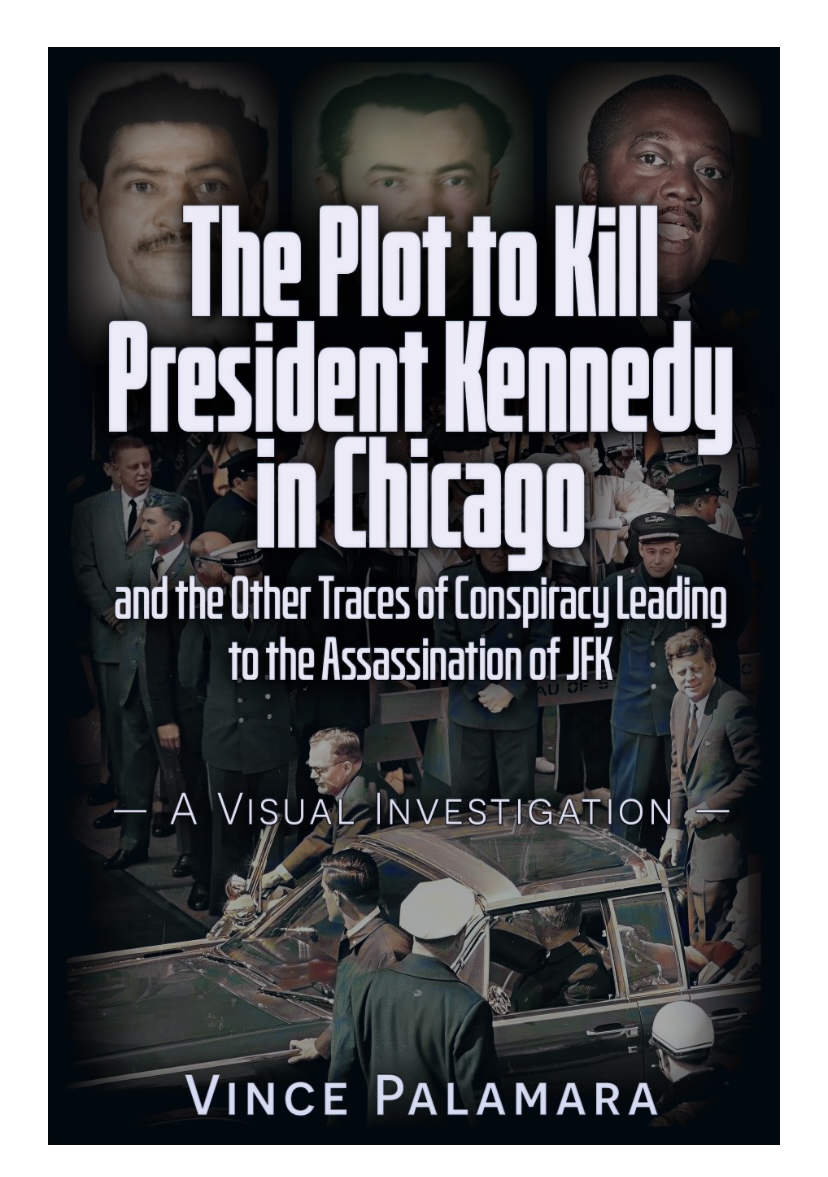


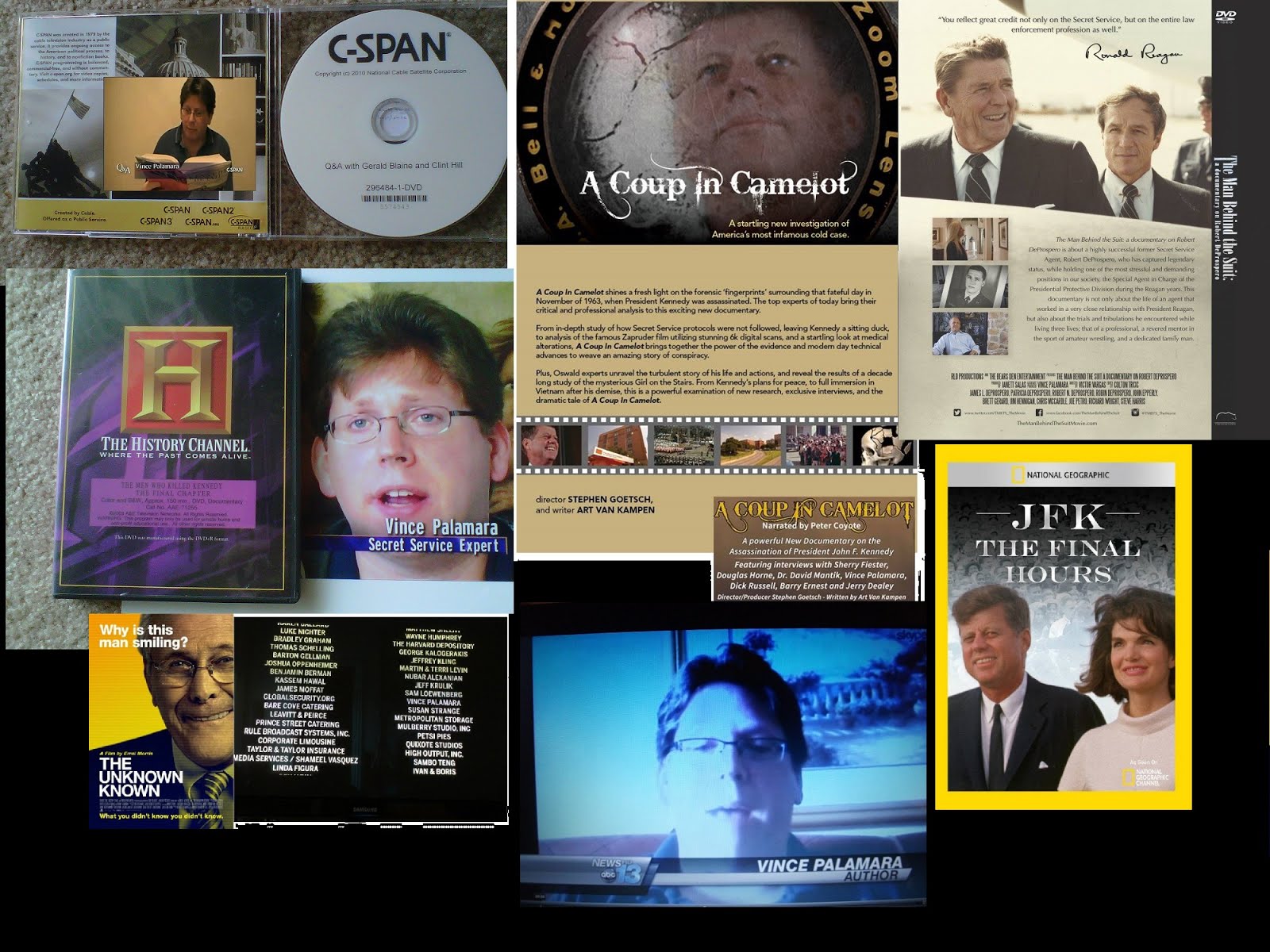

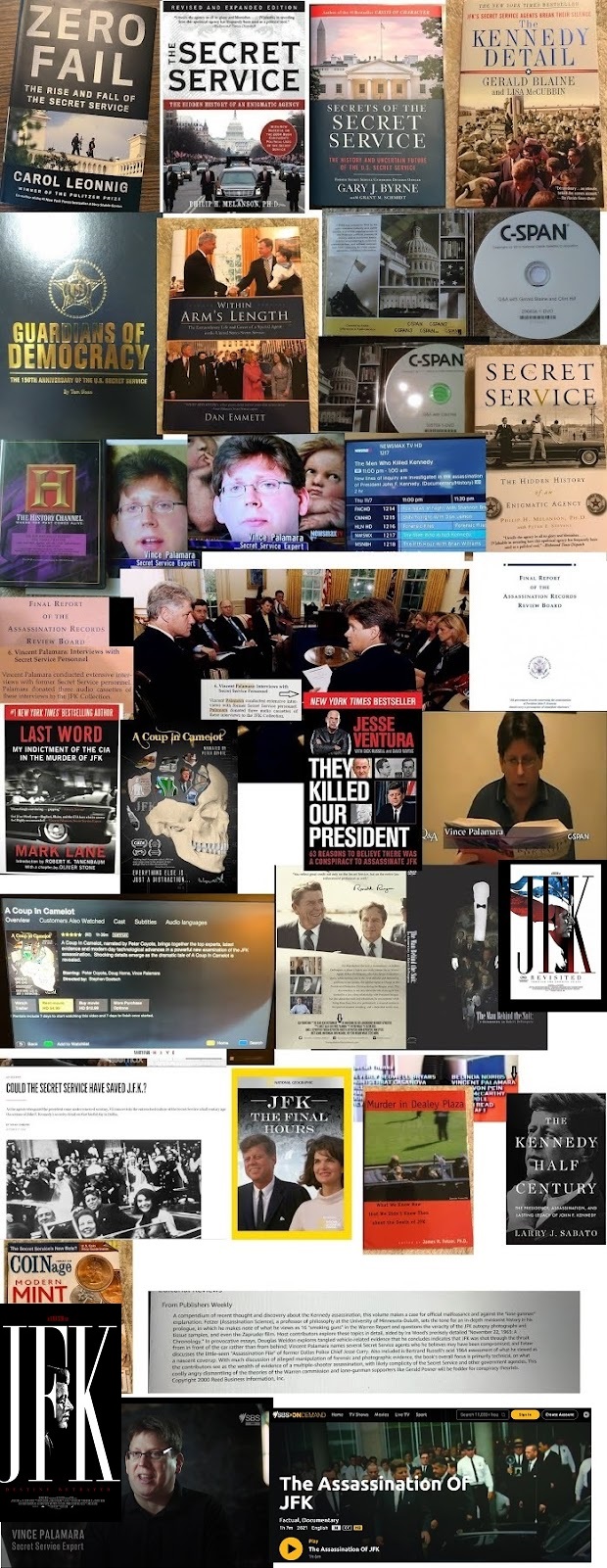
![VINCE PALAMARA [remember to scroll all the way down!]](https://blogger.googleusercontent.com/img/b/R29vZ2xl/AVvXsEjSZ-Z_puqnjl3UgdiJxBenMyIMaFhmBD-PYQUsxCtFS4UF7dJQB6n32rt9a0ZqFRPmuBoukhrMZxv6LOD9GoUGPiaShO3wj_8xL98obRAsUbIf0mXutzbq7jKDrCp8Y-Y0k9rnS5ARjQQ/s1600/11.jpg)


![CHAPTER 8 OF ARRB FINAL REPORT [I AM IN THIS REPORT, AS WELL]...HMMM---THE SECRET SERVICE DESTROYS](https://blogger.googleusercontent.com/img/b/R29vZ2xl/AVvXsEimGbOuG69gW-cgAbsfjd8p8PD-subznIjcsQXUSFq560o_kiXunf9TcH0fkOqmWuK73id6m5TyVMhWcfBrPUEee6JLbvqNZKdIVQa5Drcz568Ue6GZdf_PUtLuLwPDcucv3gOn5KGBZPw/s1600/DSCF0462.JPG)


